Advancing Research on Pollutant Synergies and Airway Health

WP4, focused on Mechanisms & Test Systems to Evaluate Pollutant Synergies, is preparing upcoming in vivo studies to further investigate the impact of particulate matter (PM) and rhinovirus (RV) on the airways.

Barrier organs such as the respiratory tract are continuously exposed to environmental challenges. Both PM and RV are known to damage airway tissues and negatively affect human health. As the nasal epithelium is the first point of contact for environmental pollutants, the upcoming research by WP4 aims to better understand the effects of exposure to PM and RV by analysing the cellular and molecular responses in nasal epithelial cells from both healthy and asthmatic subjects using in vivo models.

The Detrimental Effects of Particulate Matter On Airway Health

PM is a complex mixture of airborne particles that poses a significant threat to respiratory health. Due to their small aerodynamic diameter, these particles can penetrate deep into the lungs and cross the mucosal barriers of the nasal epithelium, contributing to inflammation and tissue damage.

Rhinovirus Infection of Airway Cells

In contrast, rhinovirus infects the nasal epithelium, where it replicates and spreads to adjacent cells. This leads to epithelial damage and disruption of barrier integrity, accompanied by the release of pro-inflammatory cytokines, increased oxidative stress, and activation of antiviral signalling pathways.

Synergistic Effects of PM and RV in Individuals with Asthma

In individuals with asthma, epithelial cells are already altered, resulting in impaired barrier function and a heightened inflammatory state. This makes them more prone to exaggerated or dysregulated responses to viral infections. Environmental factors such as PM can further weaken epithelial integrity and alter host defence mechanisms, amplifying RV-induced effects. These synergistic effects of PM and RV contribute to increased disease severity and a higher risk of virus-induced exacerbations in people with asthma.

Next steps in Research

To further investigate these mechanisms, WP4 will conduct in vivo studies using an intranasal murine model. The research aims to characterise the physiological differences between asthmatic and control mice following exposure to PM and RV, with a particular focus on their combined synergistic effects.

This work will provide important insights into the damage induced by PM and RV in the airways of both healthy and asthmatic individuals and will support the development of more effective therapeutic interventions.

Stay connected!  Follow SynAir-G on Twitter and LinkedIn, and subscribe to the SynAir-G Newsletter to receive latest updates.

SynAir-G presents at K-HEALTHinAIR 3rd webinar

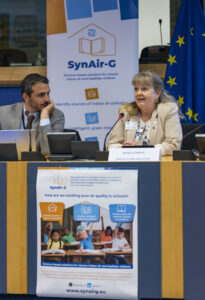
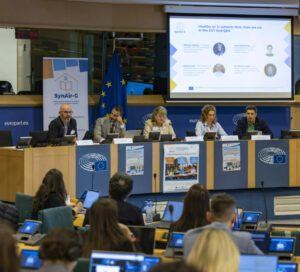
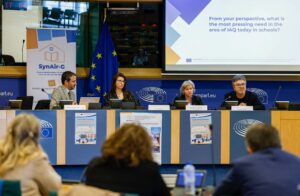
On 16 April 2026, SynAir-G participated in the webinar “Indoor Air Quality in Schools: From Pilot Experience to Policy Action”, organised by K-HEALTHinAIR.

The event brought together researchers and experts from across Europe to examine how indoor air quality (IAQ) affects health, wellbeing, and learning environments in schools. The webinar showcased preliminary clinical findings from pilot studies conducted in Austria, Poland, and Greece as part of the K-HEALTHinAIR and SynAir-G projects, offering a comprehensive overview of indoor air quality challenges across different European contexts.

Monitoring Air Quality in Classrooms

Professor Spyros Pandis (University of Patras, Department of Chemical Engineering) presented the methodologies used to monitor pollutants both inside and outside classrooms. Using ENSENSIA low-cost sensors alongside the Mobilab, researchers were able to capture detailed air quality data across different school environments.


His analysis highlighted variations in volatile organic compound (VOC) concentrations between classrooms, with subjects such as Arts and Mathematics showing the highest levels, an insight that underlines how classroom activities can influence air quality.

Health Impact on Children

Eleni Maria Papatesta, Pediatrician and Research Fellow at the Allergology and Clinical Immunology Unit of the University of Athens, presented findings on the relationship between indoor air pollution and FeNO levels in children.

Her research demonstrated that exposure to elevated levels of PM2.5, NO₂, and CO is associated with increased FeNO levels in children with allergic rhinitis. These findings indicate a higher susceptibility to airway inflammation, reinforcing the need for targeted interventions to improve air quality in school environments.


Policy Insights from the IDEAL Cluster

Evangelia-Christina Andreadi, Project Manager at the European Federation of Allergy and Airways Diseases Patients’ Associations (EFA), presented the second IDEAL Cluster Policy Brief titled “When Children Breathe: The Impact of Indoor Air Quality on Children’s Health.”

Drawing on data from more than 8,000 participants—primarily children aged 3 months to 18 years—she highlighted key policy gaps and challenges:

  • There is no unified European standard covering all aspects of indoor air quality, from monitoring practices to health impact thresholds.
  • Awareness of indoor air quality remains limited, with many people overlooking simple but effective measures such as regular ventilation.


Evidence from Austrian and Polish Pilot Studies

Findings from national pilot studies further illustrated the real-world implications of indoor air quality in schools. Hanns Moshammer, Senior Researcher at the Department for Environmental Health at the Medical University of Vienna, presented results from the Austrian pilot, highlighting key observations on classroom air quality.

Artur Badyda, Professor at the Warsaw University of Technology, shared findings from the Polish pilot study, providing additional evidence on students’ exposure to air pollutants in school environments. Together, these contributions reinforced the need for coordinated, evidence-based policies across Europe.

More information

SynAir-G extends its thanks to the K-HEALTHinAIR project for organising this important event and for connecting experts and sharing findings from real classroom environments in Europe.

You can find the agenda and the speakers list of the webinar here: Indoor Air Quality in Schools: From Pilot Experience to Policy Action – KHealthInAir

The recording will be available soon!

Stay connected!  Follow SynAir-G on Twitter and LinkedIn, and subscribe to the SynAir-G Newsletter to receive latest updates.

World Health Day 2026: “Together for health. Stand with science”


On 7 April 2026, the World Health Organization (WHO) marks World Health Day by launching a year-long campaign dedicated to advancing global health. This year’s theme “Together for Health: Stand with Science” highlights the vital role of scientific innovation in improving the health of both people and the planet. The campaign celebrates achievements in health science while highlighting the importance of multidisciplinary collaboration to translate knowledge into meaningful action, emphasizing the One Health approach.

The SynAir-G project is proud to support World Health Day and this global campaign. At its core, SynAir-G is committed to safeguarding and promoting citizens’ health and well-being starting with research and science. By generating new insights on Indoor Air Quality (IAQ) in schools, raising awareness on the impact of indoor air pollution on children’s health and learning and developing targeted interventions and tools, SynAir-G empowers to act on evidence and drive meaningful change using a One Health approach. In doing so, the project helps reduce disease burden and address inequalities linked to air quality, improving health and preventing disease across Europe.

Specifically, SynAir-G aims to uncover and quantify the synergistic interactions between indoor air pollutants in classrooms. This is achieved through the development of innovative and improved monitoring system, the low-cost sensor boxes that feature the advanced ENSENSIA sensor system and continuously track air pollutants. In parallel, the project is designing environmentally friendly interventions to enhance indoor air quality in schools. By sharing these findings with key stakeholders, including healthcare professionals, educators, and policymakers, SynAir-G actively stands with science and supports the translation of evidence into concrete, impactful solutions to improve the air our children breath daily.

In the fourth year, SynAir-G has delivered significant scientific achievements across its activities aimed at improving IAQ. These range from advances in data collection and management strategies to valuable new insights into how indoor air pollutants affect children’s health, drawing on in vitro and in vivo models, innovative sensor technologies and the project’s “Save The World” gamified app. Considerable progress has been made in sustainable interventions as well, such as the development of the SynAir-G Green Walls.

SynAir-G’s scientific achievements have been widely recognized at numerous conferences and events across Europe. As an active member of the IDEAL Cluster, SynAir-G has participated in numerous events organized by fellow Cluster projects and contributed to the development of two joint policy briefs, helping to amplify the Cluster’s collective voice and advocate for meaningful action on IAQ.

Looking ahead, SynAir-G will continue to build scientific knowledge on indoor air quality in schools and its impact on children’s health. The project remains committed to disseminating this knowledge, championing science, developing evidence-based solutions and fostering multidisciplinary collaboration to ensure that research is effectively translated into action.

Stay connected!  Follow SynAir-G on Twitter and LinkedIn, and subscribe to the SynAir-G Newsletter to receive latest updates.

Showcasing SynAir-G Results at the REG Summit 2026

During the 2026 Respiratory Effectiveness Group (REG) summit, held from 19-21 March, EPFL’s Athanasios Nenes presented key results from SynAir-G’s work on the indoor air quality monitoring in schools.

The REG Summit brings together a diverse, international community of experts in respiratory research and care, spanning clinical medicine, environmental science, and public health. This interdisciplinary setting provided an excellent platform to showcase SynAir-G’s latest findings on indoor air pollution in schools.


In his presentation, Athanasios Nenes introduced the FORTH ENSENSIA multi-sensor low-cost air quality monitoring system, which delivers high-quality data on pollution sources and variability. He also shared results from school monitoring campaigns, highlighting the varying composition of indoor air pollution in classrooms over time, the contribution of outdoor pollution to the indoor air quality (IAQ) and how this varies across countries and seasons. Lastly, EPLF’s unique LAPI-BREATH facility was spotlighted, which can greatly support testing and optimizing SynAir-G’s real-time virus sensors. Read more about the role of LAPI-BREATH within the SynAir-G project here.

The summit offered a valuable opportunity for SynAir-G to reconnect with the research community, gain recognition for its work, and contribute to the growing body of knowledge on indoor air quality and its impact on children’s health. SynAir-G remains committed to advancing the understanding of indoor air quality and developing practical, sustainable solutions to improve the indoor air for children.


Stay connected!  Follow SynAir-G on Twitter and LinkedIn, and subscribe to the SynAir-G Newsletter to receive latest updates. 

Strong Progress and Scientific Recognition for SynAir-G

Exciting updates from Working Package (WP) 8 on Project management & Networking, as it continues to lead the overall coordination, management, and strategic oversight of the SynAir-G project.

Strong Progress Confirmed

Despite the complexity inherent to a multidisciplinary and multi-partner initiative, the project achieved a positive outcome at the recent review meeting, confirming that SynAir-G is progressing in line with its objectives and delivering meaningful scientific and societal impact.

This encouraging evaluation reflects the strong collaboration among partners, the high quality of the work produced, and the consortium’s shared commitment to advancing research on indoor air quality and children’s health.

Strengthened Scientific Visibility

Alongside management activities, the WP supports active engagement in scientific dissemination, further enhancing the visibility and impact of the project at national and international levels.

In this context, the National and Kapodistrian University of Athens (NKUA) participated in the Annual Panhellenic Conference “Allergic Child – State of the Art.” During the conference, Milena Papatesta presented the study:

“Impact of School Indoor Air Pollution on FeNO Levels in Children: The Modifying Role of Allergic Rhinitis”

The study attracted significant scientific interest and received an award, underscoring its quality and its contribution to understanding how environmental exposures influence airway inflammation in children.

Moving Forward

These milestones highlight the scientific excellence and real-world relevance of SynAir-G. Through effective coordination, active dissemination, and strong research outputs, WP8 ensures that the project not only advances knowledge but also contributes to public health awareness and therefore to healthier indoor environments for children.

As the project progresses, the consortium remains committed to strengthening collaboration, overcoming challenges, and maximizing the long-term impact of SynAir-G.

Stay connected!  Follow SynAir-G on Twitter and LinkedIn, and subscribe to the SynAir-G Newsletter to receive latest updates.

Empowering Students in Athens Through Indoor Air Quality Monitoring

As the end of the school year approaches — and with it, the completion of our school monitoring period — a very pleasant surprise awaited the SynAir-G team at a primary school in Athens.

Beyond the objective of monitoring indoor air quality (IAQ), the SynAir-G project also aims to actively engage school communities in understanding and improving the air they breathe. In this particular school, students have embraced the project in an inspiring way that exceeded our expectations, demonstrating the broader educational value of the initiative.

Students Take the Lead.

Using portable IAQ sensors installed in their classrooms, the students in this school in Athens have taken responsibility for tracking the air quality in their learning space on a daily basis. Each day, a student assumes the role of the “Air Quality Guardian” and records the sensor air quality readings on an hourly basis.

Alongside this, the sensor provides visual feedback through emoji indicators, making it easier for students to quickly interpret air quality conditions:

  • 😊 Smiling face means good air quality and no action is needed
  • 😐 / ☹️ Neutral or sad face means elevated CO₂ levels are detected

When high CO₂ levels are detected, the students immediately take action: they open more windows — and sometimes even the classroom door — to improve ventilation and restore healthy air quality. This simple yet meaningful routine helps children understand how indoor environments influence their concentration, comfort, and wellbeing, while also teaching them how small behavioral changes can contribute to better indoor air quality.

A Meaningful Impact Beyond Monitoring

This spontaneous initiative brought great satisfaction to the SynAir-G team and highlighted the real-world impact of the project. What began as a scientific monitoring exercise has evolved into a valuable educational experience, empowering students to take ownership of their indoor environment.

Seeing children actively engaged, aware, and motivated reinforces the idea that our work extends beyond data collection. It supports lasting behavioural change and helps raise environmental awareness from an early age.

As this school year’s monitoring campaign draws to a close, moments like this remind us why SynAir-G matters: improving indoor air quality today helps create healthier and more supportive learning environments for the future.

Stay connected!  Follow SynAir-G on Twitter and LinkedIn, and subscribe to the SynAir-G Newsletter to receive latest updates.

AI-Powered Analysis of Synergistic Effects of Indoor Pollutants and Health Impacts

We are excited to announce a significant milestone in our project’s technical development. To truly understand the complex relationship between indoor air pollutants in our environment and our health, we need high-quality data. Over the last period, we have successfully built the first robust version of our “digital AI engine” required to process this information.

Building a Strong Foundation: Data Collection & Quality

As illustrated in the workflow below, we have implemented a fully automated system to gather data from various sources (databases) and centralize it into a single Data Warehouse, from where we can retrieve the data properly. The process, known technically as ETL (Extract, Transform, Load), ensures that our data is consistent and ready for analysis.

Simultaneously, we launched a Data Availability Check mechanism. This can be seen as a sort of quality control; it automatically scans our datasets by time, location, and specific components to ensure nothing is missing. It even generates visual plots, allowing our researchers to instantly see “the big picture” of our data composition and spot any gaps.

Figure 1: Illustrated workflow of data

From Data to Insights: The AI Pipeline.

With this solid foundation in place, we have activated our 1st automated AI Pipeline. This system takes the processed data (including ESSENSIA data) and trains advanced algorithms to learn. Specifically, the AI is now actively analyzing how air pollutants and environmental conditions impact human health, using metrics like vital signs and questionnaire responses.

SynAir-G at the ONE-Bridge in Health Conference

From 8-11 December 2025, the ONE-Bridge projects’ European One Health Conference took place in Patras, where Prof. Sotiris Nikoletseas from University of Patras delivered a Keynote presentation titled “The Artificial Intelligence of Things (AIoT) in Digital Health: Challenges and Opportunities”. His talk included preliminary findings from SynAir-G’s work on AI and data analysis, including on the development of the first version of the project’s “digital AI engine.”


Next steps

Our partners are meeting regularly to dive deeper into these findings. We are also currently designing a process to make this valuable dataset available to the public, ensuring that our research can benefit the wider scientific community.

Stay connected!  Follow Synair-G on Twitter and LinkedIn, and subscribe to the SynAir-G Newsletter to receive latest updates.

Advancing SynAir-G Virus Sensors: The Role of LAPI BREATH

SynAir-G partners at EPFL have developed a unique facility called the LAPI BREATH, a new biosafety level 2 aerosol chamber with the potential to revolutionize how we study the spread of respiratory diseases. Developed in close collaboration with the Swiss National Science Foundation SNSF and the IVEA and AirTRAC projects, the chamber aims to mimic the transmission of biosafety Level 2 viruses, such as influenza A and B, in realistic indoor air conditions. This allows researchers to analyze the impact of environmental conditions on virus transmission. As part of SynAir-G, the chamber offers a realistic testing environment for the real-time virus sensors developed by our partners at CNR, playing an important role in helping the project move forward.

The LAPI Bioaerosol Research & Environmental Airborne Transmission Hub (LAPI BREATH)

When a person infected with a respiratory virus coughs or sneezes, tiny aerosol particles carrying the virus are released into the air. These virus-containing particles are thought to be the vehicles for spreading viral respiratory diseases such as COVID-19 or the flu from one person to another, causing considerable human mortality. Despite their importance, it is still largely unknown how environmental factors interact with these airborne virus-containing particles and influence their infectivity. Understanding these links is essential for developing effective strategies to control the spread of aerosol-borne diseases indoors, reducing their transmission and protecting public health.

The LAPI Bioaerosol Research & Environmental Airborne Transmission Hub (LAPI BREATH) is designed to help bridge this knowledge gap. The facility nebulizes virus-infected lung (and other) fluids into a large chamber filled with indoor air, simulating how an infected person releases virus-containing aerosol particles when coughing or sneezing. These particles then interact with the indoor air environment, as they would in real life. The aerosol particles are then collected in a way that mimics a person inhaling them, allowing researchers to analyse their infectivity. Equipped with state-of-the-art instrumentation, LAPI BREATH recreates real-world airborne virus transmission scenarios while minimizing the inactivation of virus particles during collection, providing highly realistic data for research.


Figure 1: Schematic of the LAPI-BREATH facility (Motos et al.,2024). Figure 2: a fish-eye view of the facility in the laboratory

The facility allows researchers to study the behavior and infectivity of virus-containing aerosol particles once they are released into the air by an infected person. By varying the composition of the aerosolized medium (such as saline solutions, saliva, or lung fluid) and adjusting atmospheric conditions (humidity, temperature, and gas composition, including acids, organic compounds, or ammonia), researchers can evaluate how these factors affect virus infectivity. This approach helps identify environmental conditions that reduce virus infectivity, supporting the development of practical strategies to lower the risk of airborne virus transmission indoors.

There is no other facility in Europe currently that can study the behavior and response of airborne Biosafety Level 2 viruses to real atmospheric conditions. Researchers are therefore in a unique position to contribute to the development of groundbreaking indoor air treatment strategies that reduce viral transmission risks and can ultimately be applied in response to respiratory disease epidemics and pandemics.

How LAPI BREATH supports the SynAir-G project

The facility can not only be used to study the behavior of airborne virus particles in indoor air, but it also supports testing the performance of real-time virus sensors developed by SynAir-G partners at CNR. Recent tests using LAPI BREATH have shown that these sensors can successfully detect influenza A, influenza B, and SARS-CoV-2, bringing us closer to finalizing their development. Once deployed, these sensors will be revolutionary for monitoring virus levels and identifying virus types indoors.

Figure 2: Pictures showing the usage of the LAPI-BREATH facility to test a virus sensing device developed during the SynAir-G project.

Want to know more?

In the video linked here, Dr. Ghislain Motos (LAPI,EPFL) and Dr. Celine Terretaz (LAPI/LEV, EPFL) introduce the LAPI BREATH facility and explain how it is used to study airborne viruses.

To learn more about the chamber and how it has been used in investigations on airborne Influenza A virus particles, click here.

If you have any questions or would like more information about the facility, please don’t hesitate to contact SynAir-G or EPFL. We will continue sharing updates on the development of the virus sensors and the ways in which LAPI BREATH is advancing the project.

Stay connected!  Follow Synair-G on Twitter and LinkedIn, and subscribe to the SynAir-G Newsletter to receive latest updates.

SynAir-G Manchester: Recruitment Phase Kicks Off

Good news! Recruitment of children has officially started this September 2025 at our pilot site in Manchester, supported by a newly produced explanatory video.

Understanding the Health Impact of Indoor Air Pollution

A key part of the SynAir-G project focuses on assessing how indoor air pollutants affect the health of school children across five pilot sites in Europe. This research combines medical measurements of lung function with an interactive, gamified educational app Save The World, designed to raise awareness and engage children in a fun and meaningful way.

Launching the Recruitment Phase in Manchester

In Manchester, recruitment has begun in five primary schools. Children will undergo lung function and other medical assessments, and some may also receive a home spirometer and a Garmin watch to monitor their health. In two of the schools, Green Walls have been installed, which are “smart” gardens that incorporate natural plants to improve air quality and overall well-being in indoor spaces.

To support recruitment efforts in Manchester, the University of Manchester team has developed a short video aimed at parents of participating school children. The video clearly explains the goals of the project and outlines what participation involves for both children and their parents in simple, accessible language.

You can watch the video here!

What’s Next

Recruitment in Manchester will end by the end of this school term. We will continue to share updates as this exciting phase progresses and look forward to reporting on the outcomes from Manchester and our other pilot sites.

Stay connected!  Follow Synair-G on Twitter and LinkedIn, and subscribe to the SynAir-G Newsletter to receive latest updates.

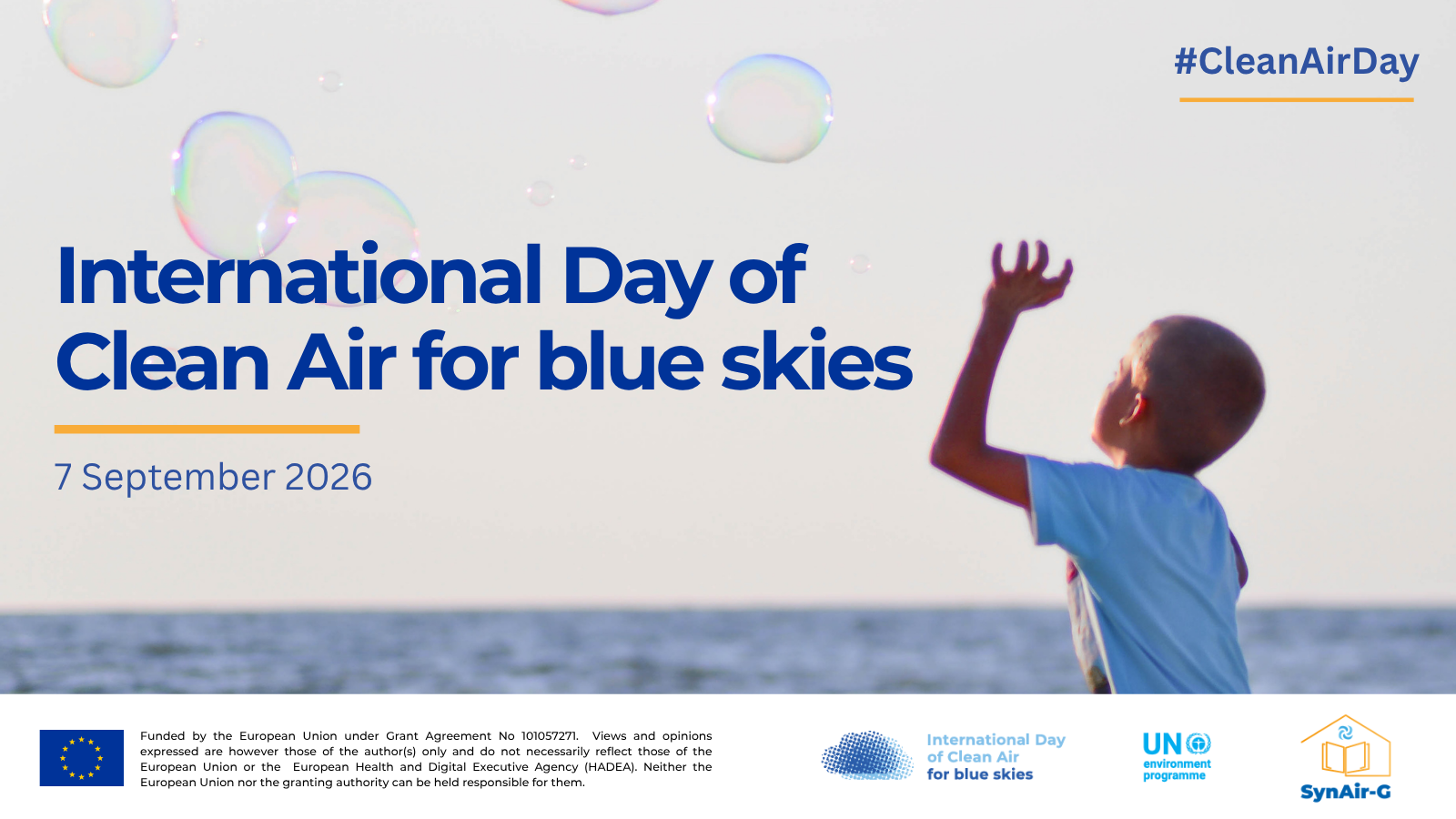
SynAir-G urges collective action for Clean Air on the 2025 International Day of Clean Air for Blue Skies

On 7th September, SynAir-G joins the International Day of Clean Air for Blue Skies, led by the United Nations Environment Programme. This year’s theme, “Racing for Air” calls for urgent collective action to tackle air pollution and ensure cleaner air to protect the most vulnerable, especially children. With 99% of the global population breathing polluted air, the urgency to act has never been greater.

When we think of air pollution, many picture traffic smog or industrial chimneys. But the truth is more complex: outdoor and indoor air are connected and both affect our health. Children spend up to a third of their day inside classrooms. If the air inside is polluted, the risks to their health and development increase, particularly for those with asthma and allergies.

SynAir-G’s mission: cleaner indoor air in schools

Our project focuses on indoor air quality in schools and its connection with outdoor air. Little is known about how indoor and outdoor pollutants interact – or what that means for our health. We bring together scientists, schools, civil society, and public authorities to better understand these interactions and to design interventions that improve the air children breathe every day.

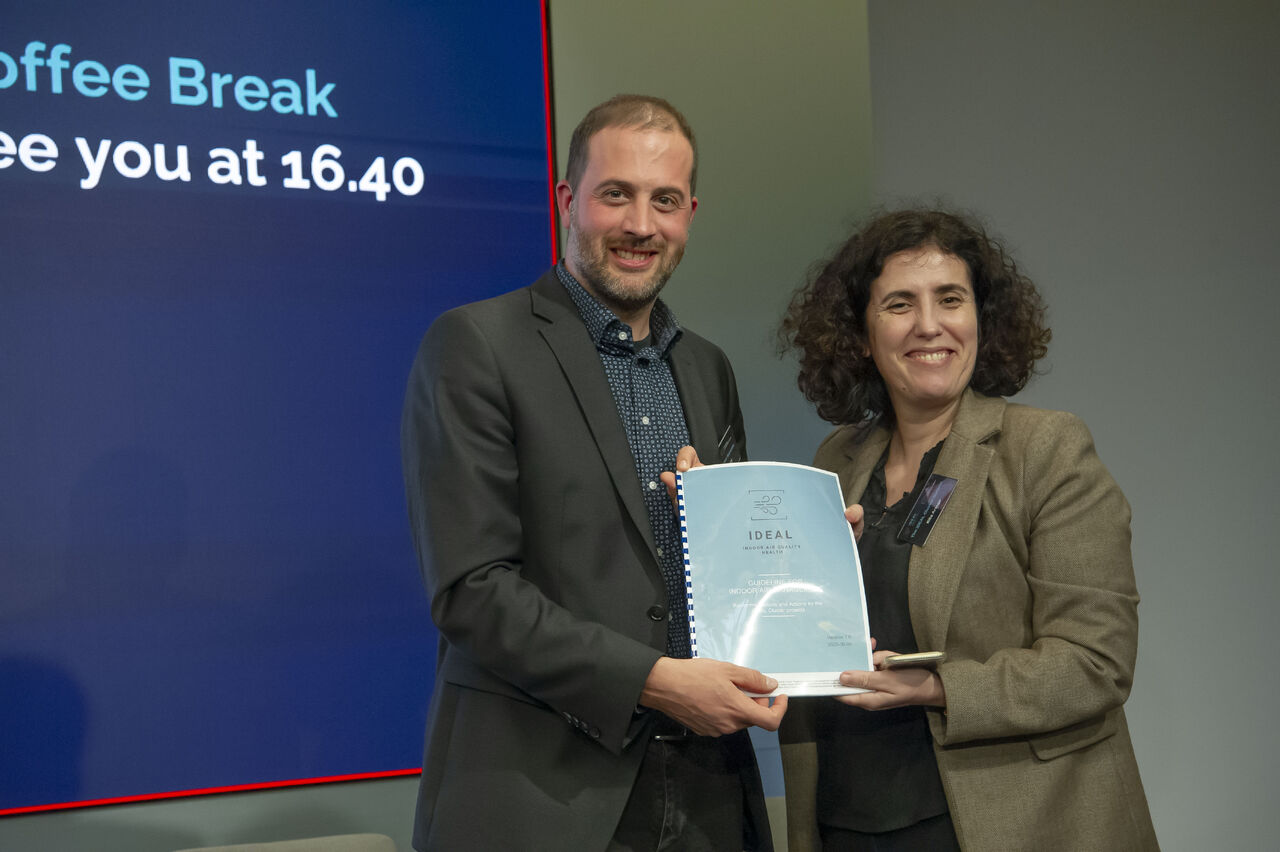
We also collaborate through the Indoor Air and Health Cluster (IDEAL Cluster), a network of EU projects working together to ensure that new research translates into real-world policies that protect people’s health.

New discoveries inside classrooms

Recent SynAir-G research highlights why this work is so urgent. Using advanced sensors in classrooms in Greece, we found that the main pollutants indoors were not the usual outdoor ones from traffic or industry, but volatile organic compounds. These are invisible chemicals released from cleaning products, paints, or furniture. They can irritate the lungs, trigger allergies, and worsen asthma symptoms. Children are most exposed to certain pollutants inside schools and knowing this makes it possible to design solutions that protect their health more effectively.

The findings show the link between indoor and outdoor air, highlighting the urgent need for action in both areas to ensure healthy air for all. The research outlines practical steps that can be taken now to protect children against air pollutants, recognizing that air knows no boundaries. SynAir-G will continue collaborating across sectors to identify the sources of indoor air pollution, both from inside and out, uncover the complex interactions between pollutants, and develop effective interventions that safeguard children’s health.

A call to action for #CleanAir inside and outside

Air pollution is a global challenge, but it is also one we can address if we act together. Governments, schools, businesses and communities all share responsibility for cleaner and healthier air.

On this International Day of Clean Air for Blue Skies, SynAir-G reaffirms its commitment to protecting children by advancing science on indoor air pollution, improving indoor air quality, raising awareness and supporting stronger policies. Clean air is essential for health today and for the well-being of generations to come.

Stay connected!  Follow Synair-G on Twitter and LinkedIn, and subscribe to the SynAir-G Newsletter to receive latest updates.