WP4, focused on Mechanisms & Test Systems to Evaluate Pollutant Synergies, is preparing upcoming in vivo studies to further investigate the impact of particulate matter (PM) and rhinovirus (RV) on the airways.
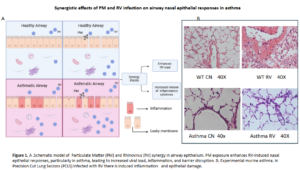
Barrier organs such as the respiratory tract are continuously exposed to environmental challenges. Both PM and RV are known to damage airway tissues and negatively affect human health. As the nasal epithelium is the first point of contact for environmental pollutants, the upcoming research by WP4 aims to better understand the effects of exposure to PM and RV by analysing the cellular and molecular responses in nasal epithelial cells from both healthy and asthmatic subjects using in vivo models.
The Detrimental Effects of Particulate Matter On Airway Health
PM is a complex mixture of airborne particles that poses a significant threat to respiratory health. Due to their small aerodynamic diameter, these particles can penetrate deep into the lungs and cross the mucosal barriers of the nasal epithelium, contributing to inflammation and tissue damage.
Rhinovirus Infection of Airway Cells
In contrast, rhinovirus infects the nasal epithelium, where it replicates and spreads to adjacent cells. This leads to epithelial damage and disruption of barrier integrity, accompanied by the release of pro-inflammatory cytokines, increased oxidative stress, and activation of antiviral signalling pathways.
Synergistic Effects of PM and RV in Individuals with Asthma
In individuals with asthma, epithelial cells are already altered, resulting in impaired barrier function and a heightened inflammatory state. This makes them more prone to exaggerated or dysregulated responses to viral infections. Environmental factors such as PM can further weaken epithelial integrity and alter host defence mechanisms, amplifying RV-induced effects. These synergistic effects of PM and RV contribute to increased disease severity and a higher risk of virus-induced exacerbations in people with asthma.
Next steps in Research
To further investigate these mechanisms, WP4 will conduct in vivo studies using an intranasal murine model. The research aims to characterise the physiological differences between asthmatic and control mice following exposure to PM and RV, with a particular focus on their combined synergistic effects.
This work will provide important insights into the damage induced by PM and RV in the airways of both healthy and asthmatic individuals and will support the development of more effective therapeutic interventions.
Stay connected! Follow SynAir-G on Twitter and LinkedIn, and subscribe to the SynAir-G Newsletter to receive latest updates.