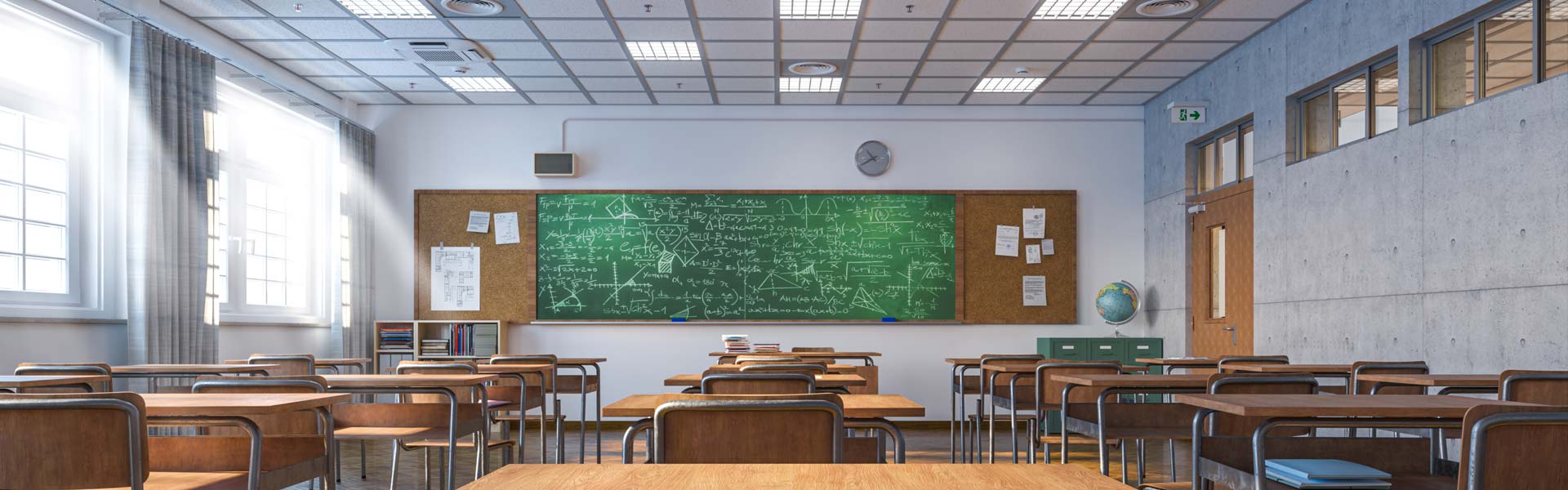
Children spend 90% of their time indoors and the air they breathe directly shapes their health. Yet indoor air quality remains one of the most underregulated areas in EU policy. On 11 June 2026, SynAir-G brought this conversation to the European Parliament.
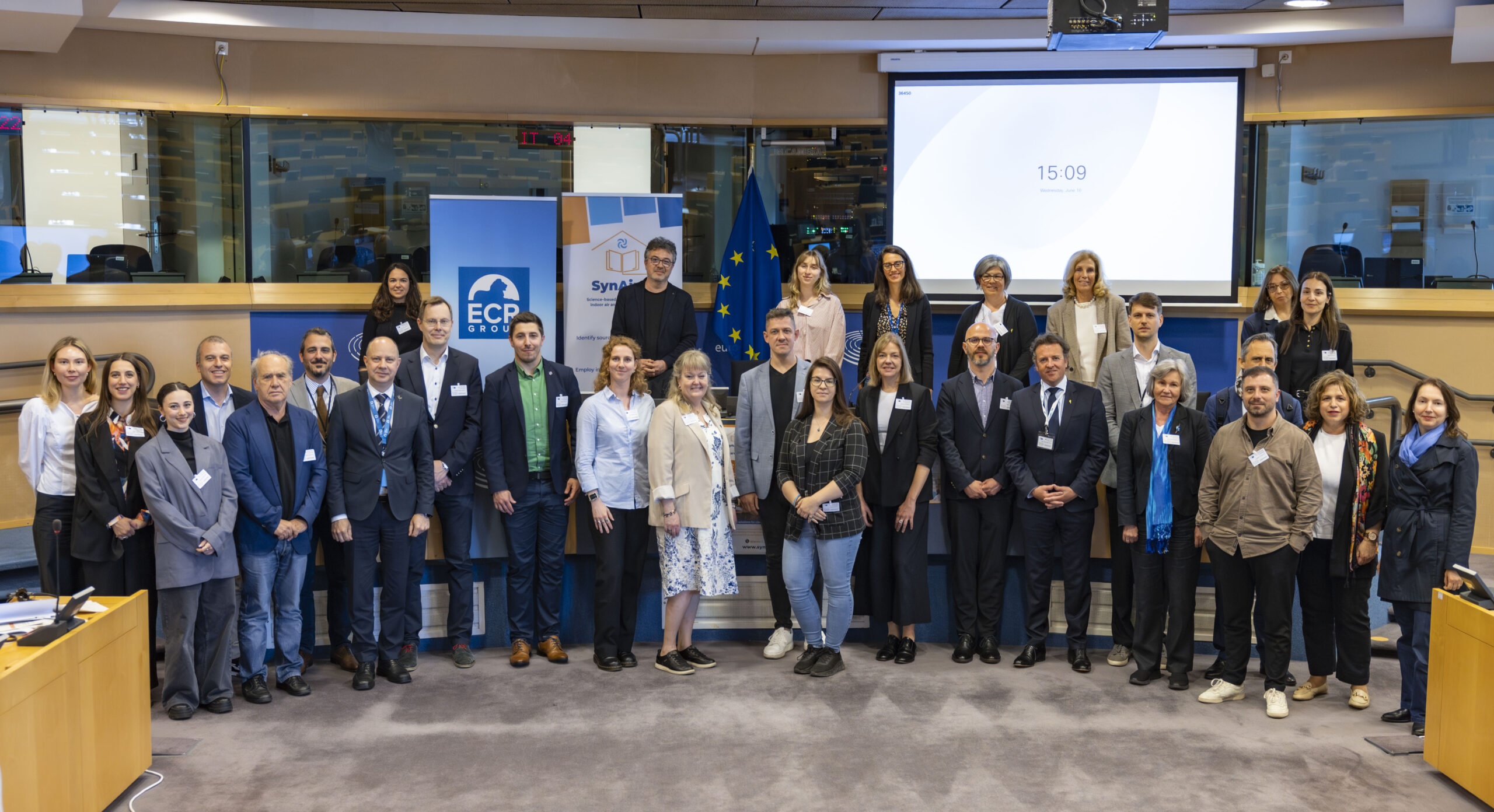
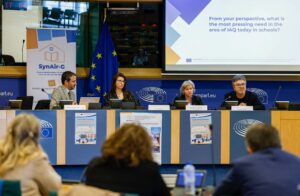
137 participants in the room and online, including researchers, clinicians, patient advocates and policymakers gathered for a roundtable on indoor air quality and children’s health, hosted by MEP Aurelijus Veryga (ECR).
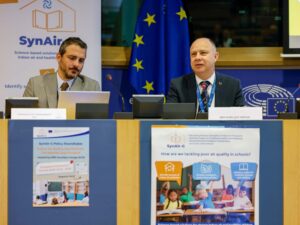
“What’s more important than children’s health?” — MEP Aurelijus Veryga set the tone from the opening, speaking not just as a politician but as a parent and former school board member who has seen the impact of poor indoor air quality firsthand.
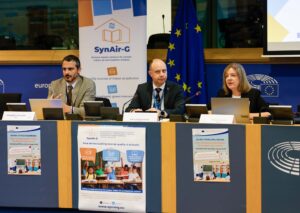
Panel 1 — The science and the human story
Children are not simply small adults as they breathe faster, stay closer to the ground and spend most of their time indoors, making them uniquely vulnerable to poor air quality. “There is a pressing need to protect children,” stated Panagiotis-Minos Chaslaridis (SynAir-G, EFA).
The numbers make the case. Pneumonia accounts for 14% of deaths in children under 5. Asthma is one of the most common childhood conditions. And 1 in 4 school children suffers from allergies today, a figure that could rise to half the population by 2050.
Kristina Siemens (SynAir-G, GA2LEN) presented the project roadmap to address this: raising awareness, equipping healthcare professionals to include indoor air quality in their management plans and giving families better tools to act. “Children with allergies and asthma are particularly vulnerable and we need healthcare professionals, schools and families all moving in the same direction.”
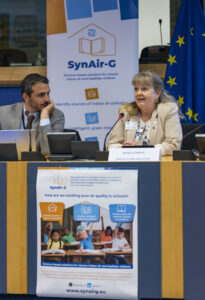
The human story behind the data came from Mikaela Odemyr (Astma- och Allergiförbundet, Sweden), a patient advocate and parent carer of a child with asthma and allergies. Her son’s school journey and the visible difference better ventilation made in his classroom showed the impact of indoor air on health. “You need to bring in the people who make decisions if you want something to change.”
Mario Lovrić (EDIAQI project from the IDEAL Cluster) flagged that many schools sit next to heavy traffic, with countless chemical and biological indoor pollutants still completely unregulated. Dr. Tamas Szigeti (National Center for Public Health and Pharmacy, Hungary) added that most ongoing studies look at single pollutants in isolation, but the real challenge lies in understanding how they act together on children’s developing bodies.
Lula Timmerman (Federal Public Service Health, Belgium) brought the panel back to policy with a reminder: the legal framework you work within determines what you can actually achieve and enforcement matters as much as ambition. Her message: “Don’t try to be perfect. Try to improve.”
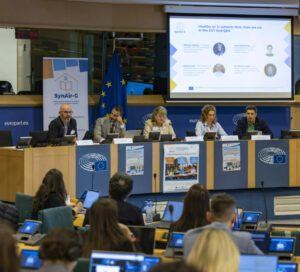
Panel 2 — From research to regulation, what needs to happen next?
Špela Novak (Društvo Atopijski dermatitis, Slovenia) brought up the importance of raising awareness in schools. However it cannot be where the effort stops. “It is awful that a child’s health depends on the person standing in front of them and not on the law. This needs to be written into legislation, not just recommendations or guidelines.”
Dr. Irina Zastenskaya (World Health Organization) widened the lens and explained that indoor air quality is not just about respiratory health. It shapes neurodevelopment and the cumulative effect of chemicals acting together on children’s bodies is still vastly underestimated. Strong regulatory frameworks built on a safe-by-design approach are essential.
Bogdan Atanasiu (DG Energy, European Commission) pointed to what is already moving. The Energy Performance of Buildings Directive now has a dedicated place for indoor air quality in its 2024 recast. But legislation alone is not enough: “We have the ingredients, now member states need to put regulatory measures and financing in place to act on indoor air quality.”
MEP Veryga closed the day on a note of shared responsibility. Change does not always require large budgets. It requires knowledge, motivation and follow through. “Empowering parents and schools to act on what we already know is where change begins.”
A strong foundation for policy action
The roundtable once again showed that the science on children’s indoor air quality is robust, the patient and carer voice is powerful and the policy tools are within reach. What is needed now is the political will to bring them together.
A huge thank you to all speakers for a strong day of science, stories and shared commitment to cleaner indoor air for children — Panagiotis-Minos Chaslaridis, Kristina Siemens, Mario Lovrić, Dr. Tamas Szigeti, Lula Timmerman, Mikaela Odemyr, Špela Novak, Dr. Irina Zastenskaya and Bogdan Atanasiu. A special thank you to MEP Aurelijus Veryga for hosting the day and supporting healthier indoor environments for children. And a big shout out to our fellow IDEAL Cluster projects for their invaluable contributions to this work: EDIAQI, INQUIRE, InChildHealth, TWINAIR, LEARN, KHEALTHinAIR.
Read our policy priorities on indoor air quality: IDEAL Cluster Policy Brief
Stay connected! Follow Synair-G on Twitter and LinkedIn, and subscribe to the SynAir-G Newsletter to receive latest updates.