
Real-time, accurate and reliable air quality information globally – SynAir-G’s work on optimizing mid-cost automatic biosensors

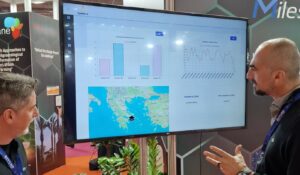
As SynAir-G partners, the Aerobiological team from the Department of Ecology, School of Biology, Aristotle University of Thessaloniki (AUTH), have been working on the challenging task of automation of bioaerosol monitoring.

Bioaerosols are airborne particles of biological origin that are a common part of the air we breathe indoors and outdoors, including pollen grains, fungal spores, bacteria, viruses, living and dead debris and fragments from plants. However, certain types of bioaerosols can trigger allergic reactions in sensitized individuals living with allergic conjunctivitis, allergic rhinitis or allergic bronchial asthma, while others can be infectious or harmful. Under certain environmental conditions, they can spread in large amounts, intensifying their potentially harmful effects. The challenge today is that current technology isn’t advanced enough to monitor them in real time or provide automated, reliable risk alerts for certain harmful types. Existing monitoring systems are either reliable and accurate but very expensive, or more affordable but not accurate or reliable enough to support operational risk alert systems and forecasts. This means that bioaerosol exposure, especially to aeroallergens, is not yet widely or openly communicated to the public. In most cases, information is available only for specific locations and is be based on unvalidated data.

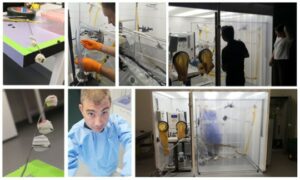
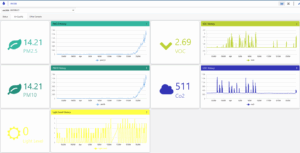
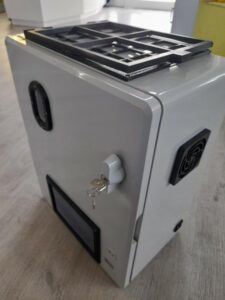
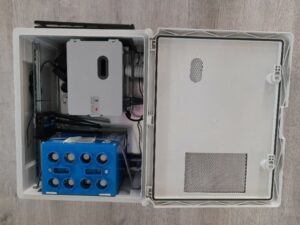
Led by As. Prof. Thanos Damialis as the Principal Investigator (PI) and Dr. Thanasis Charalampopoulos as co-leading researcher, the Aerobiology Unit from the Department of Ecology, School of Biology at AUTH is working on a new mid-range automatic bioaerosol sensor, the same type already installed and operating in 25 schools across Europe as part of the SynAir-G project. AUTH is in charge of investigating its technical specifics, how it currently works and the results the sensor produces. Most importantly, AUTH is responsible for evaluating, cross-validating and optimizing its operation, regarding both its hardware and software. By the end of the SynAir-G project, AUTH aims to deliver the first operational, low-cost, automated, near-real-time bioaerosol sensor that provides the most reliable and accurate data, meaning with minimal data gaps and the highest precision for bioaerosol identification. It should also feature traits that make it suitable for sampling indoors, such as being compact, low-weight, and quiet.

This work is the first of its kind, given that most efforts worldwide, but also in terms of European funding, have been focusing on high reliability sensors that are high-cost, large and heavy, making them difficult to be used indoors. These approaches create a gap in public awareness and information, as the data they generate only cover a small part of European or global exposure and therefore, cannot support global aeroallergen forecasting. The SynAir-G bioaerosol sensor aims to bridge this gap, as it is being developed for wide use not only by health and environmental organizations, but also by smaller businesses, municipalities, and even individual users like physicians, to better inform and support allergic patients.

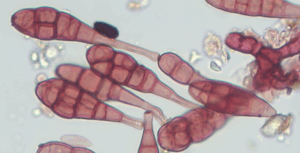
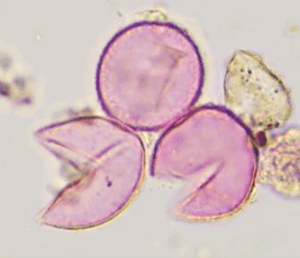
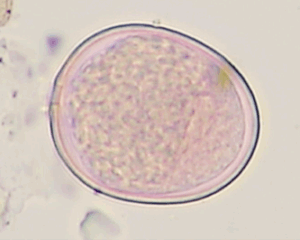
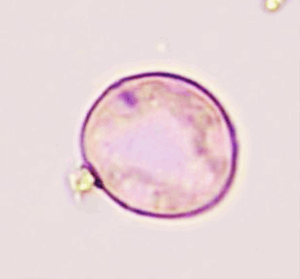
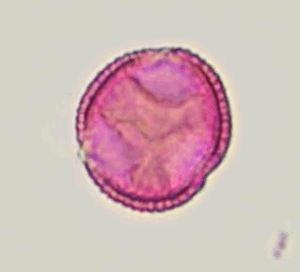
To support this effort, AUTH has been classifying thousands of images of known and highly allergenic plants, developing an image database. Some are unique and clinically important in specific regions – such as birch (Betula) pollen for Central and Northern Europe, and olive (Olea), wall pellitory (Parietaria), and cypress pollen for the Mediterranean – while others are major allergens globally, such as grass pollen (Poaceae) and fungal allergens (e.g. Alternaria spores), linked with respiratory allergies worldwide (Figure 1). This image database supports optimizing the performance of the sensor and improve its commercial classification algorithm, with the goal of achieving a new level of accuracy. This is expected to provide a unique value for money. AUTH is expected to show concrete results of their work under SynAir-G in some forthcoming annual meetings in November.


Figure 1. Images of different pollen grain and fungal spore taxa as seen under the microscope (x400 magnification)

Stay connected!  Follow Synair-G on Twitter and LinkedIn, and subscribe to the SynAir-G Newsletter to receive latest updates.
World Environment Day 2025: “Together, we can #BeatPlasticPollution” to improve Health

Each year, on June 5th, the United Nations Environment Programme (UNEP) leads World Environment Day (WED), a global initiative to raise awareness about the most pressing environmental challenges. On this day, millions of people from governments, businesses, civil society and schools come together to call for urgent environmental action.

This year, the UNEP Campaign focuses on plastic pollution. Under the slogan “Together, we can #BeatPlasticPollution”, the campaign calls for collective action and systematic change, encouraging the adoption of sustainable practices to prevent plastic pollution.

The SynAir-G project joins in supporting World Environment Day, particularly by drawing attention to the health-related consequences of pollution especially among vulnerable populations like children and those living with allergy or asthma.

Plastic pollution poses a major health threat. Beyond harming nature, biodiversity, and the climate, it infiltrates our water, food, and even the air we breathe. One alarming aspect is the release of airborne micro- and nanoparticles from degrading plastic. These particles travel across continents and are now found virtually everywhere, including in our lungs.

Recent estimates suggest that people ingest between 70,000 and over 120,000 microplastic particles each year. For people with allergies and asthma and especially children, this poses a heightened risk. Airborne plastic particles add to both indoor and outdoor air pollution and have been suggested to aggravate asthma symptoms and trigger exacerbations. It is important to note that indoor levels are the highest, directly affecting the quality of air we breathe in our homes, schools, and offices.

Through targeted research, SynAir-G aims to uncover how these airborne microplastics interact with other pollutants that impact human health. With a specific focus on indoor air quality in schools, the project seeks to develop interventions that will improve the air children breathe daily. The goal: ensure that all children in Europe can learn and grow in environments free from harmful pollution.

The urgency to act is clear. Europe alone produces up to 32 million tonnes of plastic waste each year. Tackling plastic pollution across the continent is a health priority. Investing in sustainable solutions is essential to protect both people and planet.

At its core, SynAir-G’s mission is to safeguard and promote citizens’ health and well-being, by preventing premature deaths, diseases and inequalities related to air pollution. By promoting early awareness and encouraging the management of indoor air health risks from a young age, SynAir-G helps strengthen public resilience to the health impacts of environmental and air pollution.

Stay connected!  Follow Synair-G on Twitter and LinkedIn, and subscribe to the SynAir-G Newsletter to receive latest updates.
SynAir-G work underway on Healthcare professional guidelines and a roadmap to improve IAQ for children

Currently, patients with asthma and allergies are recommended to have in place a personalised strategy to help them reduce exposure to environmental pollutants, as part of their management plan. Building on this, the SynAir-G project aims to create practical guidelines for healthcare professionals, providing them with a set of specific recommendations that can be shared with their patients.

Led by SynAir-G partners from GA²LEN, these guidelines will be integrated in a publication intended for a broader audience including government bodies and industry leaders. It will give an overview of the current regulatory framework, knowledge gaps, challenges, and unmet needs regarding indoor air quality (IAQ) and propose a roadmap for improving IAQ for all children, and especially those with asthma and allergies.

Given the wide range of activities within the IDEAL cluster focused on setting standards, policies, and guidelines, the value of bringing these efforts together to develop a single, overarching guidance was also discussed during the cluster’s 2025 Annual Meeting.

Interested in learning more about these activities? Contact us!

SynAir-G’s Living Lab approach in the development and testing of Save the World

Developed within the SynAir-G project, the Save the World app combines gamification with healthcare to educate and monitor health, raising awareness about environmental health and sustainability challenges. Utilizing an iterative Living Lab (LL) methodology, the app was co-created with stakeholders including children, parents, teachers, healthcare professionals, and developers. Field-testing events in Sweden and Denmark evaluated the app’s usability, technical performance, inclusivity, and engagement, revealing significant improvements in user experience. The app was designed to help promote healthcare innovation among children aged 8–10 years.

Save the World will be a topic of discussion during the Health and Wellbeing Living Lab Symposium & Smart Healthy Environments World Conference on 13 May 2025. During the conference, it will be highlighted how researchers emphasized ethical engagement, inclusive design, and robust data protection in the development of the app. The study behind the app’s development highlights the effectiveness of LL methodologies in fostering user-centric healthcare innovation, demonstrating the potential of gamified approaches to create impactful digital tools for healthcare and education.

Interested in learning more about Save the World? Contact us!

IDEAL Cluster projects reunited in Braga for their Annual Cluster Meeting

In March 2025 the IDEAL Cluster projects (K-HealthInAirLEARNTwinAirInChildHealthINQUIREEDIAQI and SynAir-G) gathered in Braga, Portugal, for their third Annual Cluster Meeting.

SynAir-G played an active role in shaping the discussions around indoor air quality (IAQ). Key highlights include:

  • A workshop was held to develop a common Indoor Air Quality Index together with all the IDEAL Cluster projects.
  • The development of guidelines and standards under the IDEAL Cluster was discussed, as a combination of both tools can help address IAQ from multiple angles.
  • A proposal was made to create an overarching guideline across the Cluster to ensure consistency and clarity across projects.

Stay tuned for upcoming work from the IDEAL Cluster!

Stay connected!  Follow Synair-G on Twitter and LinkedIn, and subscribe to the SynAir-G Newsletter to receive latest updates.