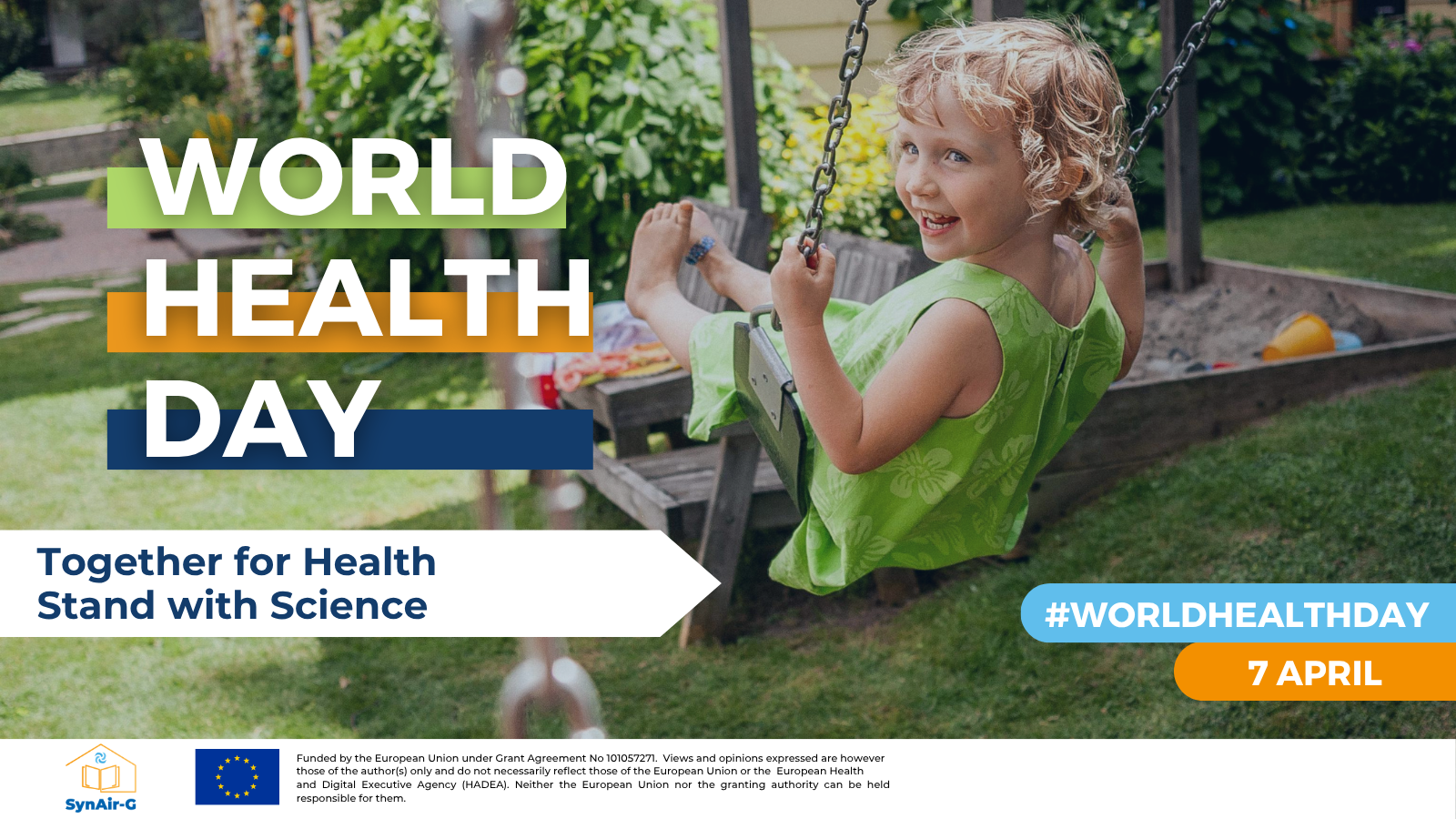
On 7 April 2026, the World Health Organization (WHO) marks World Health Day by launching a year-long campaign dedicated to advancing global health. This year’s theme “Together for Health: Stand with Science” highlights the vital role of scientific innovation in improving the health of both people and the planet. The campaign celebrates achievements in health science while highlighting the importance of multidisciplinary collaboration to translate knowledge into meaningful action, emphasizing the One Health approach.
The SynAir-G project is proud to support World Health Day and this global campaign. At its core, SynAir-G is committed to safeguarding and promoting citizens’ health and well-being starting with research and science. By generating new insights on Indoor Air Quality (IAQ) in schools, raising awareness on the impact of indoor air pollution on children’s health and learning and developing targeted interventions and tools, SynAir-G empowers to act on evidence and drive meaningful change using a One Health approach. In doing so, the project helps reduce disease burden and address inequalities linked to air quality, improving health and preventing disease across Europe.
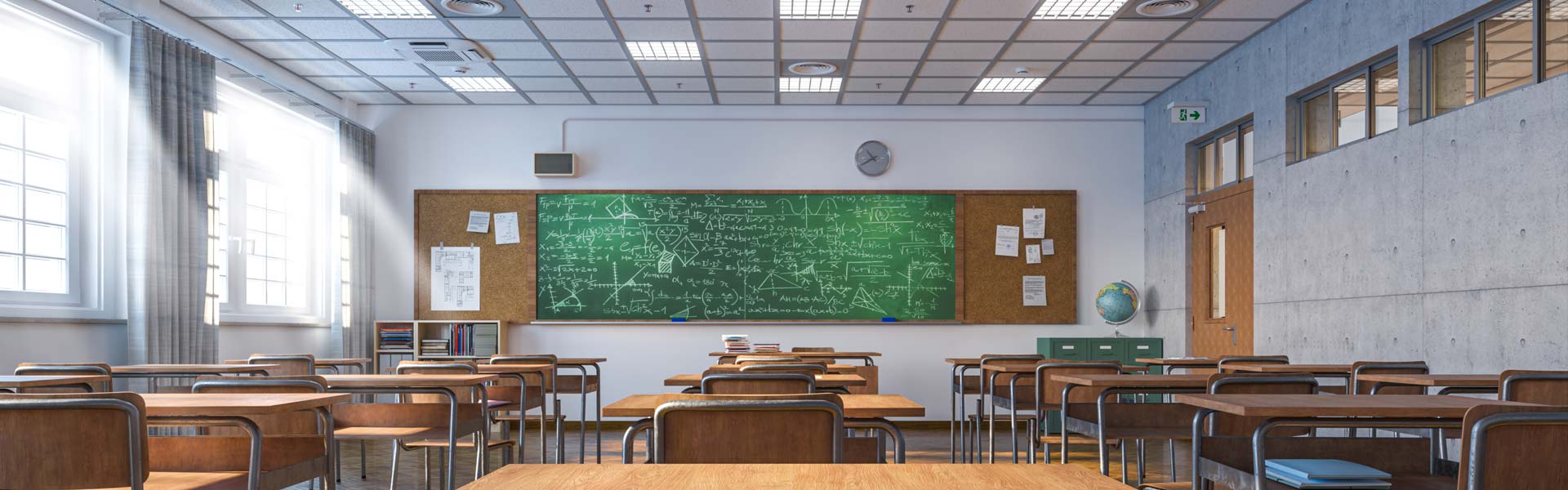
Specifically, SynAir-G aims to uncover and quantify the synergistic interactions between indoor air pollutants in classrooms. This is achieved through the development of innovative and improved monitoring system, the low-cost sensor boxes that feature the advanced ENSENSIA sensor system and continuously track air pollutants. In parallel, the project is designing environmentally friendly interventions to enhance indoor air quality in schools. By sharing these findings with key stakeholders, including healthcare professionals, educators, and policymakers, SynAir-G actively stands with science and supports the translation of evidence into concrete, impactful solutions to improve the air our children breath daily.
In the fourth year, SynAir-G has delivered significant scientific achievements across its activities aimed at improving IAQ. These range from advances in data collection and management strategies to valuable new insights into how indoor air pollutants affect children’s health, drawing on in vitro and in vivo models, innovative sensor technologies and the project’s “Save The World” gamified app. Considerable progress has been made in sustainable interventions as well, such as the development of the SynAir-G Green Walls.
SynAir-G’s scientific achievements have been widely recognized at numerous conferences and events across Europe. As an active member of the IDEAL Cluster, SynAir-G has participated in numerous events organized by fellow Cluster projects and contributed to the development of two joint policy briefs, helping to amplify the Cluster’s collective voice and advocate for meaningful action on IAQ.
Looking ahead, SynAir-G will continue to build scientific knowledge on indoor air quality in schools and its impact on children’s health. The project remains committed to disseminating this knowledge, championing science, developing evidence-based solutions and fostering multidisciplinary collaboration to ensure that research is effectively translated into action.
Stay connected! Follow SynAir-G on Twitter and LinkedIn, and subscribe to the SynAir-G Newsletter to receive latest updates.