

The SynAir-G partners from the Cyprus Research and Innovation Center (CYRIC) working on sensor integration and clean air interventions have made significant progress throughout the project. They have developed two versions of the integrated multi-sensor box, known as the SG-BOX, which brings together different sensing technologies and enables data to be transmitted to the SynAir-G data platform for storage, processing and visualisation. This represents an important step towards connecting individual sensors within an integrated monitoring system and generating comprehensive air quality data.
The SG-BOX: Version 1
The first version of the multi-sensor box was designed following an initial requirements-gathering phase. It is an autonomous, integrated system capable of measuring a range of air pollutants, including pollen, particulate matter and chemical pollutants. This is made possible by combining allergen/pollen sensors with chemical sensors. The primary aim of the design was to achieve high precision and accuracy, while enabling the detection of a broad range of pollutants.
Three main components are integrated into the box:
- RUT200 router, configured and monitored by SynAir-G partners at the University of Patras.
- ENSENSIA sensing appliance, developed by SynAir-G partners at FORTH, which detects chemical pollutants.
- Pollensense particulate matter sensor, which detects pollen.
The components are carefully positioned to avoid physical interference and ensure optimal performance. The box also allows for adequate ventilation to prevent dust accumulation that could affect measurements. A tray located above the box houses dust filters, while additional internal space has been reserved to accommodate further components or address potential integration needs.
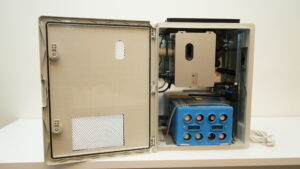
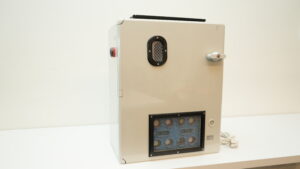
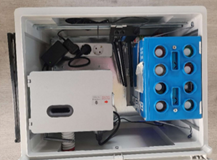
SG-BOX Version 1
To prepare for the SynAir-G project school pilots, 25 SG-BOX units were developed, with five boxes allocated to each of the five pilot countries: Finland, France, Georgia, Greece and the UK. This allowed one box to be installed in each participating school.
Each box was shipped with a setup guide and accompanied by online technical support. The systems were then tested and validated in the school environments over a 12-month period. Any technical issues encountered during this phase were documented to inform improvements to the second version.
The SG-BOX: Version 2
The second version of the SG-BOX was initially intended to house an additional biological sensor. However, as this sensor was not ready for integration at the time, the design was adapted to focus on monitoring a wider range of indoor air quality (IAQ) parameters by giving the box LoRaWAN technology capabilities.
Although the biological sensor could not be included at this stage, the design retained the necessary provisions to ensure compatibility with its potential future integration.
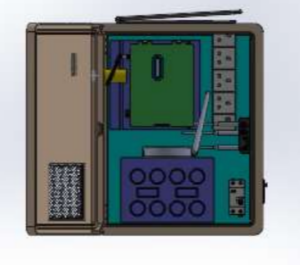
Schematic overview SG-BOX Version 2
The LoRaWAN setup
The LoRaWAN setup consists of two types of IAQ sensors distributed throughout the school environments, a gateway housed inside the SG-BOX to manage data transmission, and a smart button to assess network coverage.
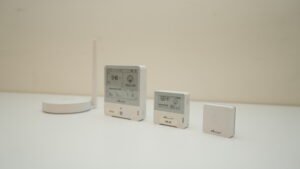
LoRaWAN setup components
The LoRaWAN setup first of all includes the Milesight UG63 gateway, handling the data transmission from the sensors. It has two antennas which can be tilted to any angle so that the gateway can be easily placed inside the box.
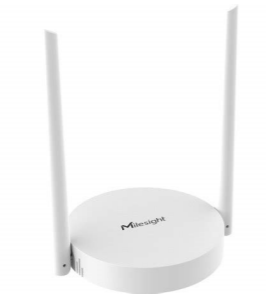
The Milesight UG63 gateway
The setup also includes two types of IAQ sensors, the Milesight AM103 and AM308. These are installed in the schools and enable the combined measurement of several environmental parameters, including temperature, humidity, CO2, TVOC, PM2.5, PM10, light and pressure. They both have a screen that allow for on-the-spot viewing of the sensing parameters.
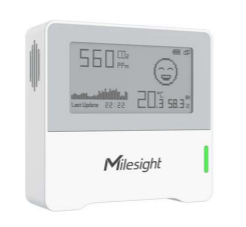
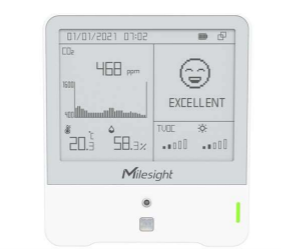
the Milesight AM103 and AM308, respectively
Lastly, the LoRaWAN setup includes a smart button, the Milesight WS101, which helps assess the effective network coverage of the SG-BOX gateway within each school. When pressed, the button immediately sends a data packet containing information on signal strength, allowing the connectivity between the gateway and the devices to be monitored.
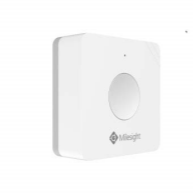
The Milesight WS101 smart button
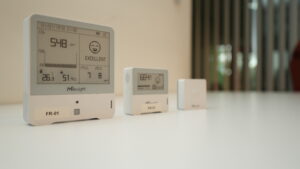
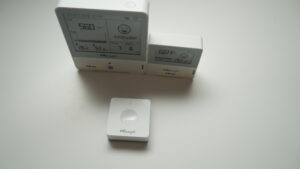
The Milesight sensors and smart button
Before deployment across all pilot countries, the LoRaWAN setup was validated through a six-month prototype pilot in a school in Greece. The installation included one gateway, five AM103 sensors, three AM308 sensors and one WS101 button, distributed throughout the school.
During the validation period, signal strength between the gateway and the connected devices was monitored to assess effective LoRaWAN coverage across the school environment. Data visualisation was supported by CyRIC’s application server and the SynAir-G dashboards. Different dashboard views were developed to serve different monitoring and data-visualisation purposes.
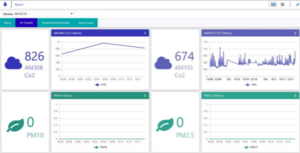
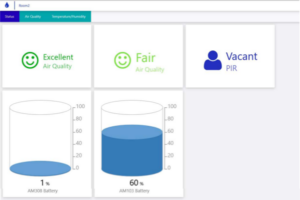
Data visualisation
Deployment of the second SG-BOX
Following successful validation, the second version of the SG-BOX was deployed across the five pilot countries. The installations included different combinations of IAQ sensors, smart buttons and gateways, depending on the needs of each pilot site.
As with the first version, each box was delivered with a setup guide to support installation and implementation in the participating schools.
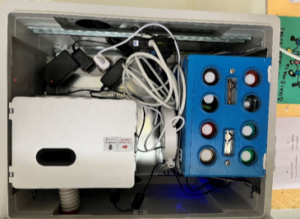
Deployed SG-BOX Version 2
Next Steps: Wrapping Up the School Monitoring Phase
Data collection in the schools was completed in July, after which the SG-BOX units and sensors were removed from the participating schools. The equipment is currently being returned to CyRIC for disassembly, with the individual components to be redistributed to their respective project partners.
As part of this process, the team has also retrieved ENSENSIA data directly from boxes that were unable to transmit their recorded measurements remotely, ensuring that all available data is recovered.
The return, disassembly and redistribution of the equipment will mark the final step of the work package on sensor integration and clean air interventions, bringing its activities to a close.
Stay in touch with SynAir-G activities? Follow us on Twitter and LinkedIn, and subscribe to the SynAir-G Newsletter!