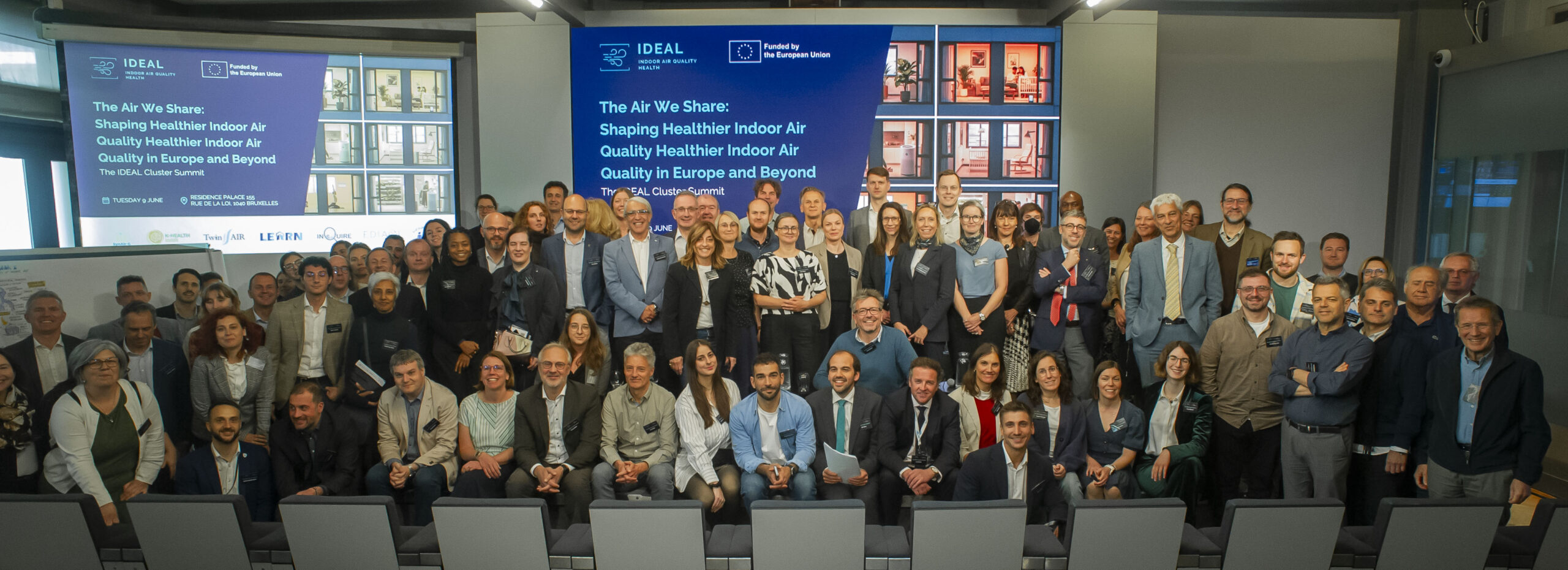
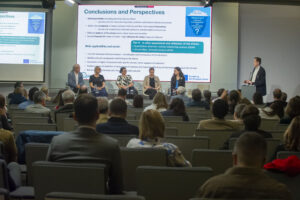
On 9 June, SynAir-G joined the six fellow Horizon Europe projects at the IDEAL Cluster Final Event, The Air We Share: Shaping Healthier Indoor Air Quality in Europe and Beyond, held at the Residence Palace in Brussels. The event celebrated four years of collaboration within the IDEAL Cluster, bringing together all 7 research projects working to improve indoor air quality (IAQ) and supporting policy development to ensure that air quality and the indoor environment receive the attention they deserve.
The event welcomed policymakers, researchers, industry representatives, public authorities, and civil society organisations from across Europe to discuss the growing importance of indoor air quality for public health and well-being. Throughout the day, the seven Horizon Europe projects presented their latest scientific findings, demonstrating how each project contributes a vital piece of the puzzle towards healthier indoor environments.
Together, the projects have generated an extensive body of scientific evidence, innovative technologies, datasets, monitoring tools, intervention strategies, policy briefs, educational and awareness-raising materials. With this robust evidence base and practical solutions now available, the event highlighted that the momentum is there to turn research into concrete, lasting action for healthier indoor environments across Europe and beyond.
SynAir-G project insights
During the first panel, Professor Nikos Papadopoulos, Professor of Allergy and Paediatric Allergy at the University of Athens and SynAir-G Project Coordinator, presented the project’s key achievements and latest scientific insights.
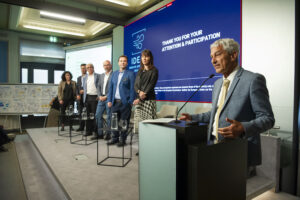
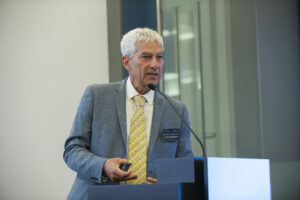
Over the past four years, SynAir-G has significantly advanced the understanding of indoor air pollution and its effects on children’s respiratory health. Through the innovative TEQOYA sensor technologies and the Save the World gamified application, the project has developed new approaches for collecting environmental and health data from school environments and participating children.
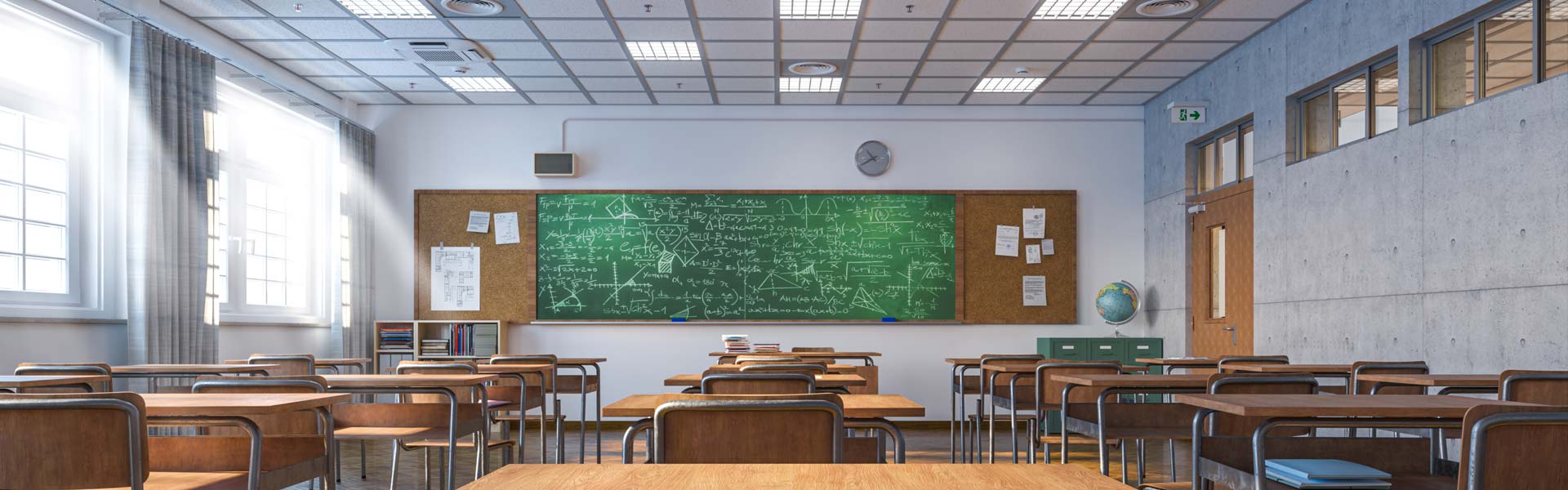
With the project’s aim of understanding the interactions and synergies between different indoor air pollutants, continuous monitoring in 25 classrooms in 5 countries has revealed the remarkable complexity of indoor air pollution mixtures. SynAir-G has shown that indoor air composition differs considerably between countries, schools, classrooms, and even according to classroom activities and teaching subjects. These findings reinforce the need to better understand the combined effects of multiple indoor pollutants on children’s health.
The project has also developed and tested sustainable interventions, including the SynAir-G Green Wall, which is nature-based solution consisting of a living plant wall, designed to improve indoor air quality by acting as sustainable biological filtration systems, with children in classrooms happily engaging in their care.
Improving Indoor Air Quality in Europe – A Political Imperative
SynAir-G also played a leading role in the policy discussions.
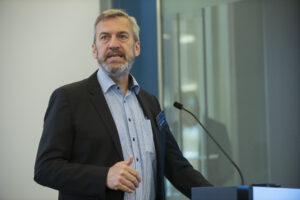
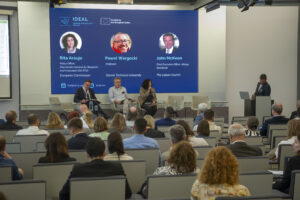
Panagiotis-Minos Chaslaridis, Senior Policy Advisor at the European Federation of Allergy and Airways Diseases Patients’ Associations (EFA) and SynAir-G partner, moderated the high-level panel “Improving Indoor Air Quality in Europe: A Political Imperative.”
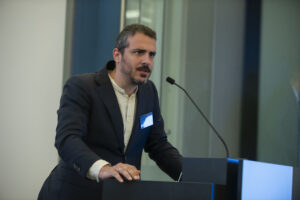
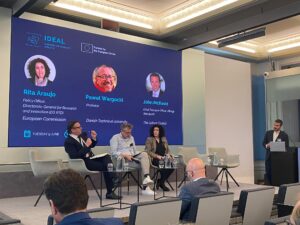
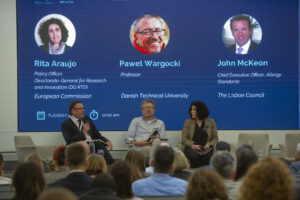
The discussion brought together distinguished speakers from European institutions, academia and industry, including:
- Sirpa Pietikäinen, Member of the European Parliament
- Joachim D’Eugenio, Adviser for Zero Pollution, Directorate-General for Environment (DG ENV)
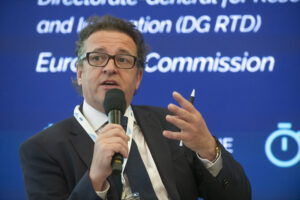
- Rita Araujo, Policy Officer, Directorate-General for Research and Innovation (DG RTD)
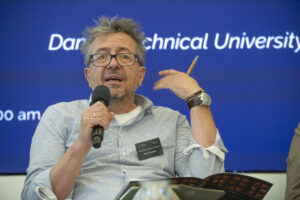
- Pawel Wargocki, Professor at the Technical University of Denmark
- Dr John McKeon, Chief Executive Officer, Allergy Standards
The discussion delivered a clear message: improving indoor air quality requires a comprehensive and coordinated policy approach.
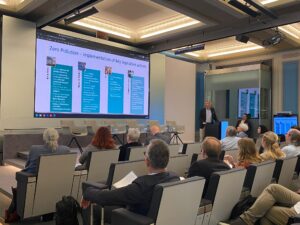
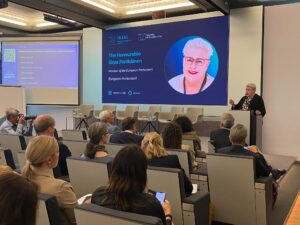
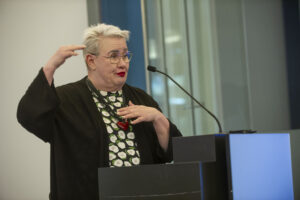
While existing European legislation, such as the Energy Performance of Buildings Directive and other sector-specific policies, already addresses certain aspects of indoor air quality, the panel discussion showed that Europe still needs a coherent regulatory framework that fully reflects the complexity of indoor environments.
This conclusion aligns closely with the recommendations developed in the two IDEAL Cluster Joint Policy Briefs, led by SynAir-G under Working Group 1.
Panellists also emphasised that the scientific evidence generated by the IDEAL Cluster provides a strong foundation for future policymaking. However, scientific publications alone are not enough. Continued collaboration, integrated datasets, consistent policy messages, stakeholder engagement, and a shared roadmap are essential to translate research into meaningful societal impact.
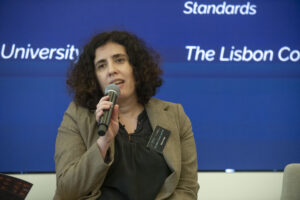
Toxicological, NAMs and Health-related Aspects of Indoor Air Quality
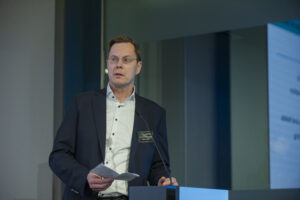
The scientific session on “Toxicological, NAMs and Health-related Aspects of Indoor Air Quality” was moderated by Tuomas Jartti, Pediatric Allergist at the University of Turku (Finland), one of the key pilot countries in the SynAir-G classroom studies.
The session brought together professors from five universities participating in Cluster projects, fostering interdisciplinary exchange on emerging approaches to indoor air quality research in the field of toxicology and health.
Transforming Science into Societal Gains
One of the afternoon sessions focused on translating scientific knowledge into real-world impact, featuring valuable contributions from SynAir-G partners Christian Goroncy and Kristina Siemens.
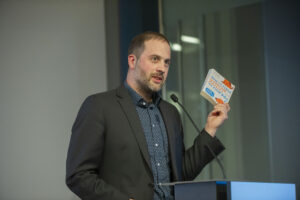
Christian Goroncy, Team Manager at the German Institute for Standardisation (DIN), highlighted the importance of standardisation as a pathway for translating research into practical implementation. Standards enable innovation to be adopted consistently, ensure reproducibility, and reduce unnecessary duplication of effort and resources.
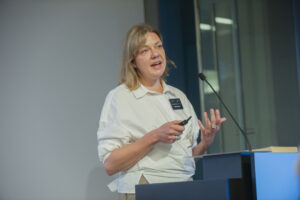
Kristina Siemens, Pediatrician and Research Associate at GA²LEN, presented the guideline development activities taking place across the IDEAL Cluster. She introduced the SynAir-G guidelines currently in preparation, which aim to support healthcare professionals in advising schools, teachers and parents on improving indoor environments for children.
She also presented the IDEAL Cluster’s broader Indoor Air Management Guidelines, developed under Working Group 4, which provide overarching recommendations with a focus on vulnerable subpopulations. They cover key indoor exposures such as chemicals, microorganisms, particles, bioaerosols and aeroallergens, and include holistic recommendations on construction, cleaning, support devices and supervision, as well as simple mitigation measures like regularly ventilating indoor spaces by opening windows, offering an overarching guidance that complements more specialised outputs from individual projects. An updated version of these guidelines is currently being finalized for publication.
The session reinforced that successful translation of research into practice requires continuous collaboration between researchers, policymakers, healthcare professionals, industry, educators, patients and other stakeholders.
IDEAL Cluster Marketplace
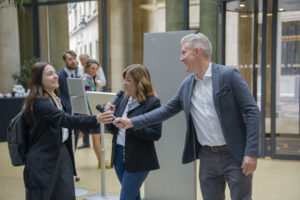
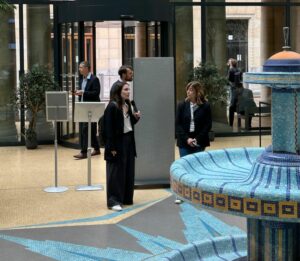
During the coffee and lunch breaks, the IDEAL Cluster Marketplace provided participants with the opportunity to explore the tools, technologies, datasets, educational materials, and policy recommendations developed across the projects, complemented by short pitches from a representative of each project.
Representing SynAir-G, Maria Kritikou, Health Visitor, Research Associate, PhD at NKUA, gave a concise overview of the Safe The World app during her pitch. Designed to collect health and indoor air quality data through a gamified approach, the app is particularly engaging and valuable for children.
Looking ahead
Although the IDEAL Cluster is approaching its conclusion, its impact is only beginning.
The IDEAL Cluster Roadmap will bring together the major outcomes of the Cluster’s working groups, identify the challenges and policy opportunities, and generate recommendations to support healthier indoor air quality across Europe. Designed as a practical and accessible document, it will support policymakers, researchers, industry and civil society in turning scientific evidence into real-world action.
SynAir-G will continue its work by completing its extensive data collection activities and move forward with the analysis and integration of the project’s rich datasets collected across multiple countries, study populations and methodologies. At the same time, SynAir-G will continue leading the development of the final IDEAL Cluster Joint Policy Brief while disseminating new scientific findings and practical recommendations.
As the project enters its final and most impactful phase, it remains committed to ensuring that its research translates into healthier indoor environments for children and communities across Europe.
Stay connected! Follow Synair-G on Twitter and LinkedIn, and subscribe to the SynAir-G Newsletter to receive latest updates.