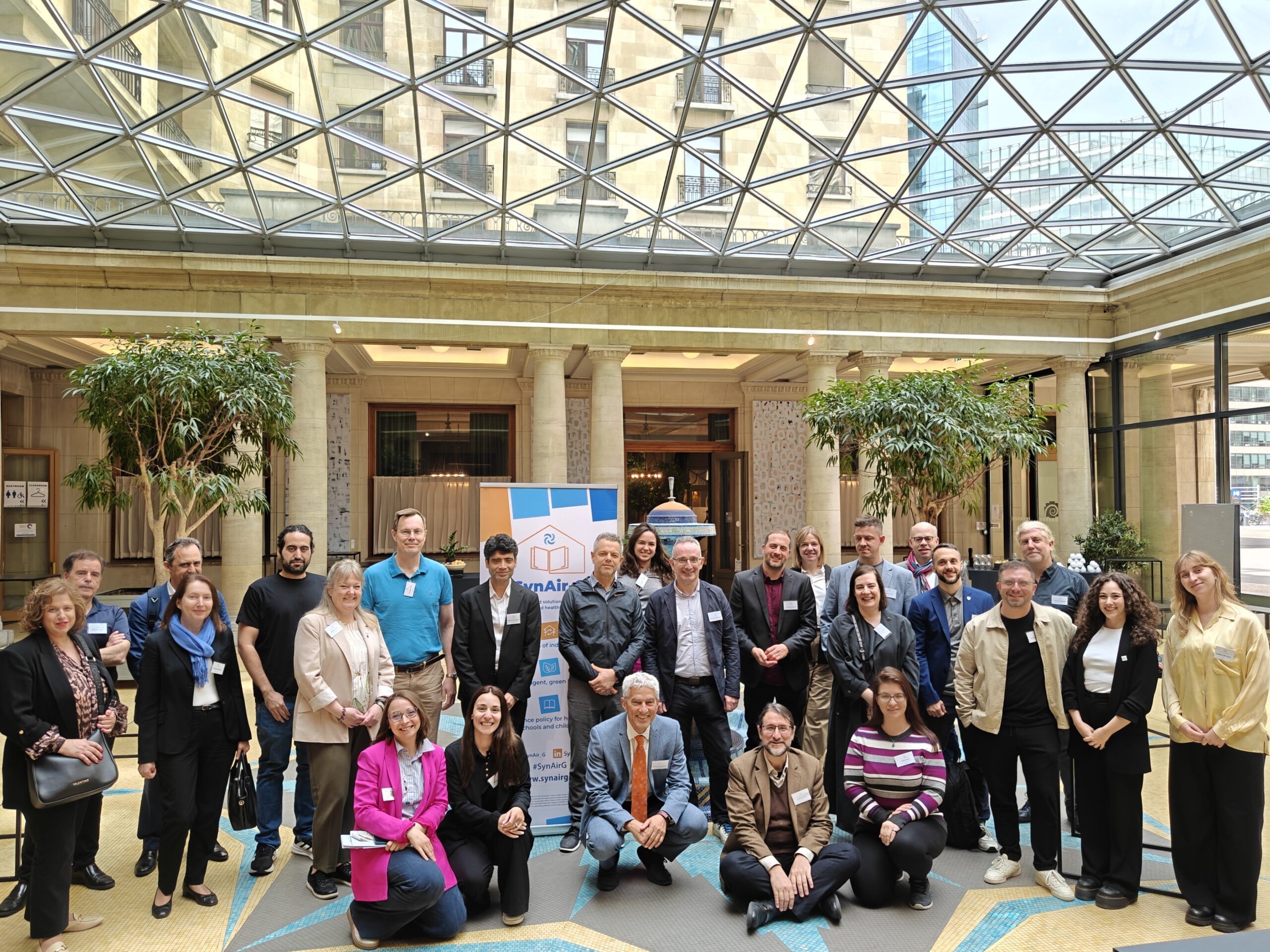
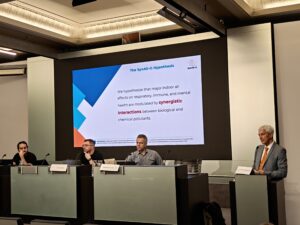
On 8 June 2026 in Brussels, SynAir-G hosted the workshop “Smart Synergies for Action: Connecting Data, Patients and Policy on Indoor Air Quality.” The workshop, the third in the “Improving Indoor Air Quality for Healthier Children” series, brought together scientists, patient advocates and policymakers around one shared goal: making indoor air quality data work for children’s health across Europe.
SynAir-G Coordinator Nikolaos Papadopoulos (National and Kapodistrian University of Athens) said, “The project is built on synergies between data, disciplines and people. This workshop was designed to share findings, explore how data can serve different policy needs and put patients and advocates at the heart of that conversation.”
From sensors to solutions: what the data tells us
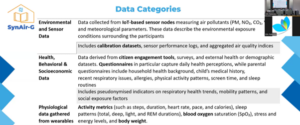
The findings from SynAir-G are significant. The project has deployed 98 sensors across 25 classrooms in Finland, France, Georgia, Greece and the UK, collecting environmental, socio-economic and health data to build one of the most comprehensive pictures of indoor air quality in European schools to date.
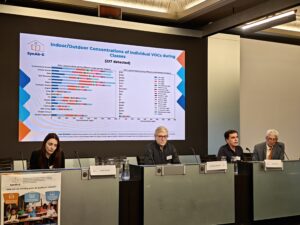
So what did we find out? Spyros Pandis (University of Patras) showed that pollutant concentrations indoors vary with activity. For example, an art class produces a very different air profile than a language lesson.
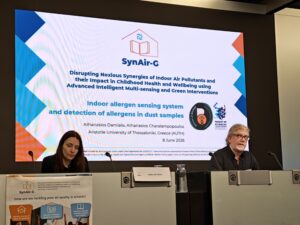
Athanasios Damialis (Aristotle University of Thessaloniki) added that aeroallergen exposure is higher than previously measured, even for children who spend most of their time inside. Outdoor exposure remains critically important: we are exposed to higher aeroallergen levels than previously thought, even when living and working predominantly indoors.
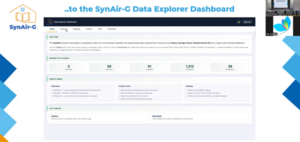
At the heart of the project is the SynAir-G Data Explorer Dashboard, presented by Pantelis Tzamalis (University of Patras). The dashboard connects environmental data directly to health outcomes in over 1,100 children, tracking asthma, allergies and atopic eczema every three months across five clinical centres.
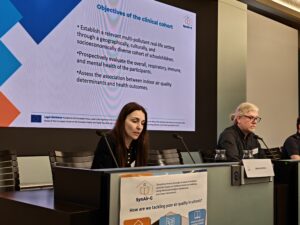
Maria Kritikou (National and Kapodistrian University of Athens) added that the study goes beyond data collection. Green interventions to improve indoor air quality are already being tested in schools, with children actively involved in looking after living green walls. She also presented the SynAir-G app, “Save the World,” a dynamic epidemiological tool designed to enable the daily recording of children’s health status. While the app is intended for the general population and not exclusively for children with respiratory diseases, it can help identify children with respiratory conditions and allergies, providing valuable data to support early detection and public health monitoring.
Managing this volume and complexity of data remains challenging. Gerasimos Kouloumbis (INLECOM) explained how the data catalogue tracks everything from environmental sensors to health devices worn by children. Nikolas Kyriakou (Cyric) outlined how the data management flow ensures open access. The goal is clear: making this data available to the wider scientific community and beyond.
Putting patients and families at the centre
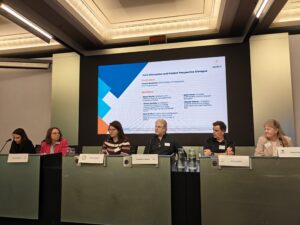
Data only matters if it reaches the people who need it. The patient panel, moderated by Valeria Ramiconi (EFA), revealed how indoor air impacts children’s health and lives of their carers.
Špela Novak, Founder and President of Društvo Atopijski dermatitis (Slovenia), spoke to the reality families face every day. “Small children cannot tell you the air feels wrong. 56% of schools in my country are near a main road. We need to connect the science to the daily reality of families and schools so that policymakers understand what is at stake.”
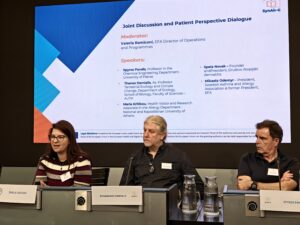
Mikaela Odemyr, President of the Swedish Asthma and Allergy Association, whose son has severe asthma and allergies, described years of adjusting temperatures, changing schools and piecing together answers that were never offered to her. “You are a mother, a patient advocate and a detective trying to understand what triggers the reactions.” Her message was clear: investment in healthier schools is an investment in the future, and patient organisations are essential to making sure that message reaches the people who can act on it.
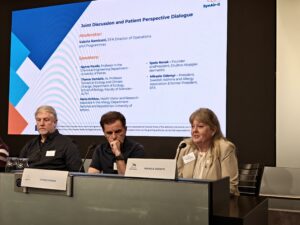
The next step is ensuring data reaches patients, families and the people who can act on it.
Working together for healthier schools across Europe
Nikolaos Papadopoulos wrapped up the day on a note of shared commitment: “We need to work together for change and stay connected.”
Thank you to all speakers for a rich and productive day: Nikolaos Papadopoulos, Gerasimos Kouloumbis, Pantelis Tzamalis, Nikolas Kyriakou, Spyros Pandis, Thanos Damialis, Maria Kritikou, Špela Novak and Mikaela Odemyr, and to moderator Valeria Ramiconi. And a big thank you to our fellow IDEAL Cluster projects working towards healthier indoor environments for children: EDIAQI, INQUIRE, InChildHealth, TWINAIR, LEARN, KHEALTHinAIR.
SynAir-G will continue working towards healthier indoor environments for children across Europe.
Stay connected! Follow Synair-G on Twitter and LinkedIn, and subscribe to the SynAir-G Newsletter to receive latest updates.